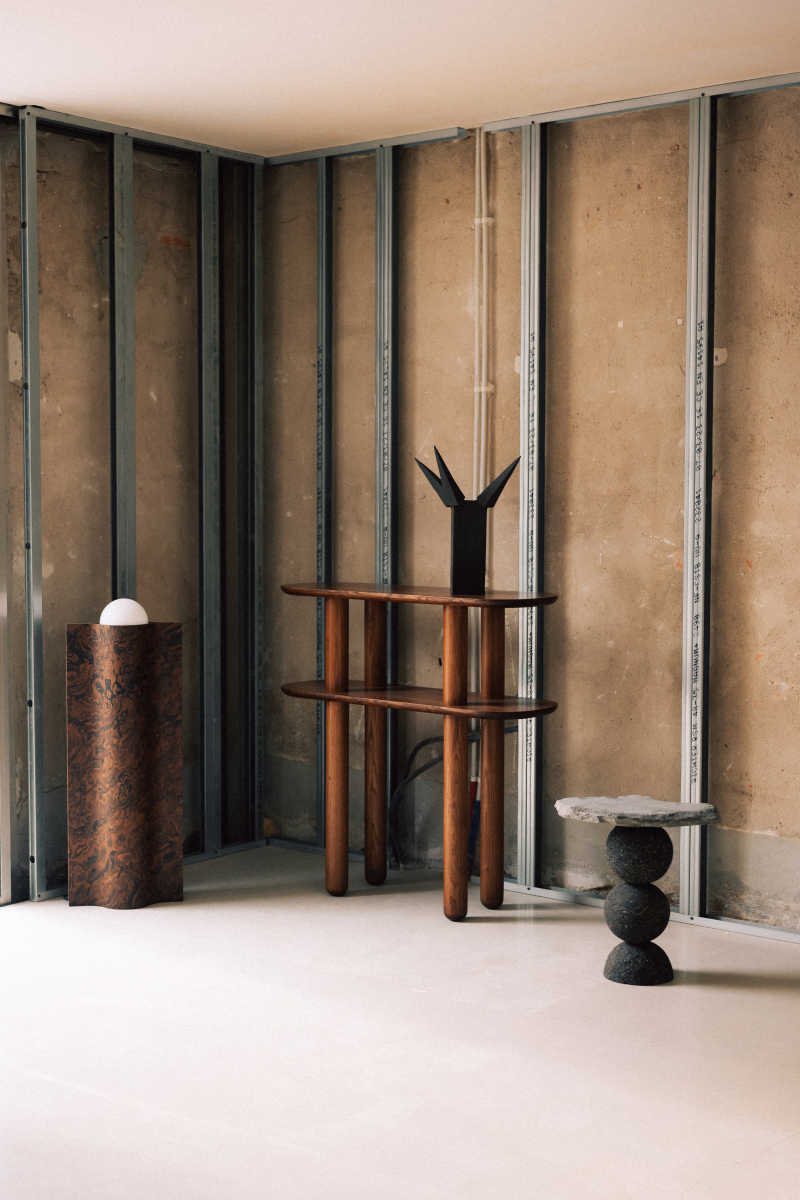
antibeige is more pop, more punk, more memphis and more whatever-you-like! in our interview series we profile people who are progressive, passionate and curious – and couldn’t care less what the neighbours think. And whom we’ve got to know as our clients or colleagues. today: florian sauvageot, gallery owner of pour vous design, hyères
interview: mathias jahn, photos: c. rosenstrauch; florian puech, for gallery „pour vous“
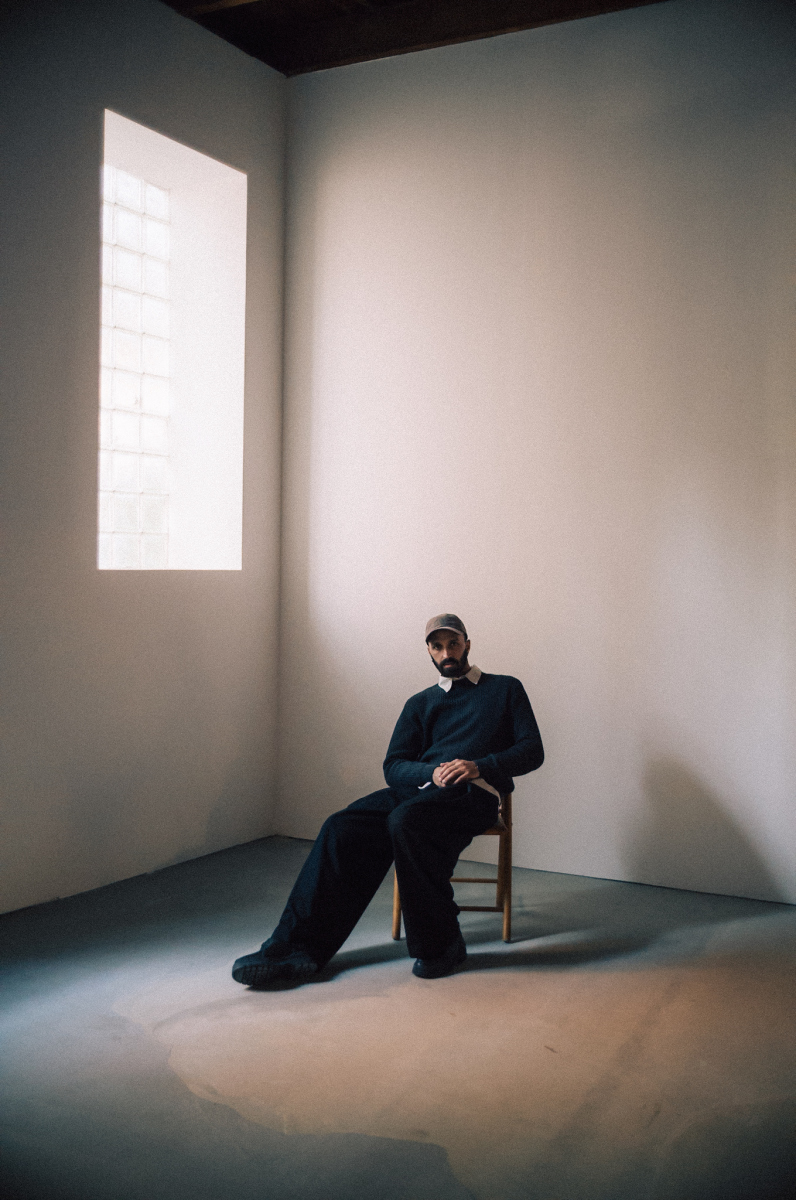
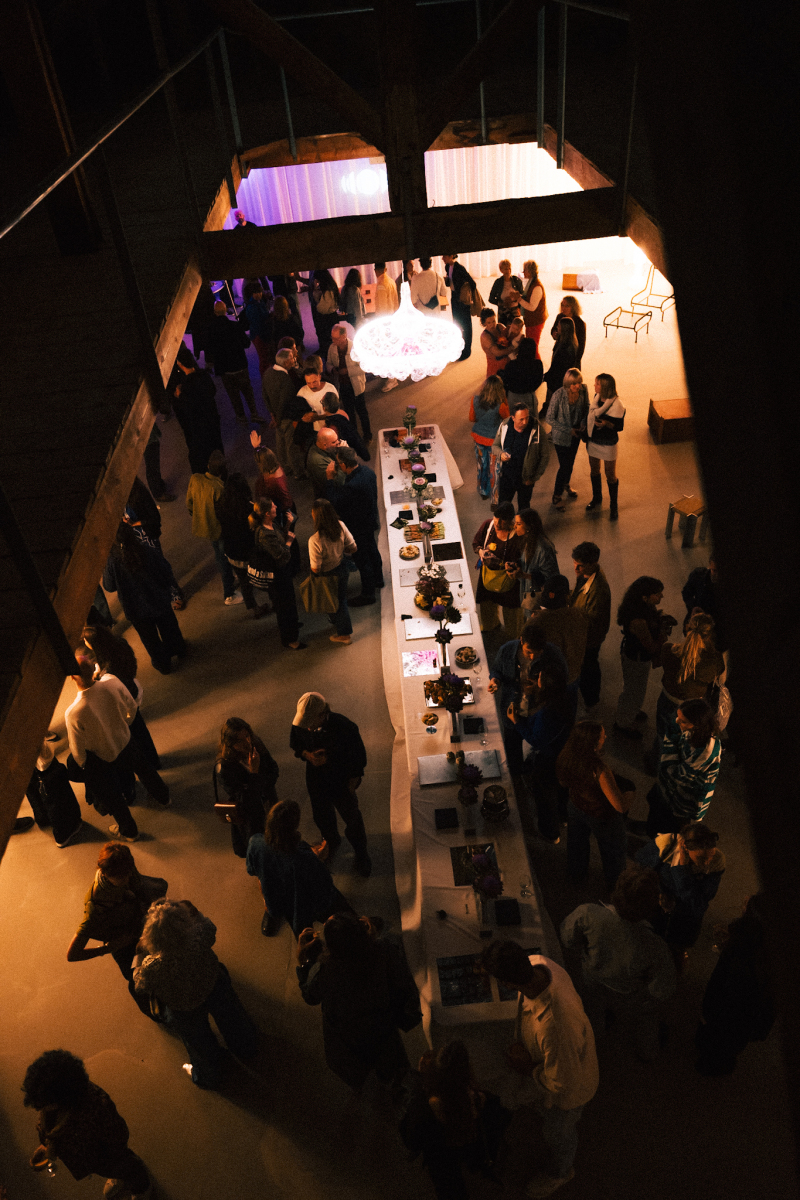
we’re new here in hyères, so naturally we’re constantly meeting new people. we’d like to introduce some of them to you – today we meet florian sauvageot, founder of the „pour vous“ design gallery and passionate networker.
design doesn’t need to become more radical, but more precise
mathias: was becoming a designer a childhood dream of yours, just as being an astronaut or a firefighter is for other children?
florian: no, not really. but I’ve always been very curious, with a strong interest in understanding how things work. my great-grandmother used to say I would become a researcher, and in a way, she was right.
design came later, as a kind of balance between creativity and technology. what interested me was not only the objects themselves, but everything around them: the context, the exchanges, the dynamics.
i first started developing my own creative practice, but I quickly realized that what truly drove me was meeting others and engaging with their work. i opened a shop selling design objects, but over time my interests and goals changed. the transition from a shop to a gallery happened quite naturally: it was a shift from selling things to building a perspective.
it seems to be a genuine passion for people – and for what people do… as a shopkeeper, you often know too little about the things you sell – and about the people who design and make them.
exactly… i don’t see an object just for its beauty, i’m interested in the decisions behind: the materials, the techniques, the tools, but also what’s not immediately visible, the constraints, the trials, the adjustments. for me it’s the entire process that leads to something that just feels right.
that’s why a personal relationship with all the designers you’re showcasing here is so important to you ?
yes, i don’t want any distance. there’s always a form of encounter. not necessarily emotional, but a working relationship, a way of understanding how they think and what they are trying to do. if I don’t understand the person behind the piece, i can’t really present it. design is not a finished object, it’s a process. and my role is to make that process visible.
yes, and it’s always wonderful to learn from people who create…
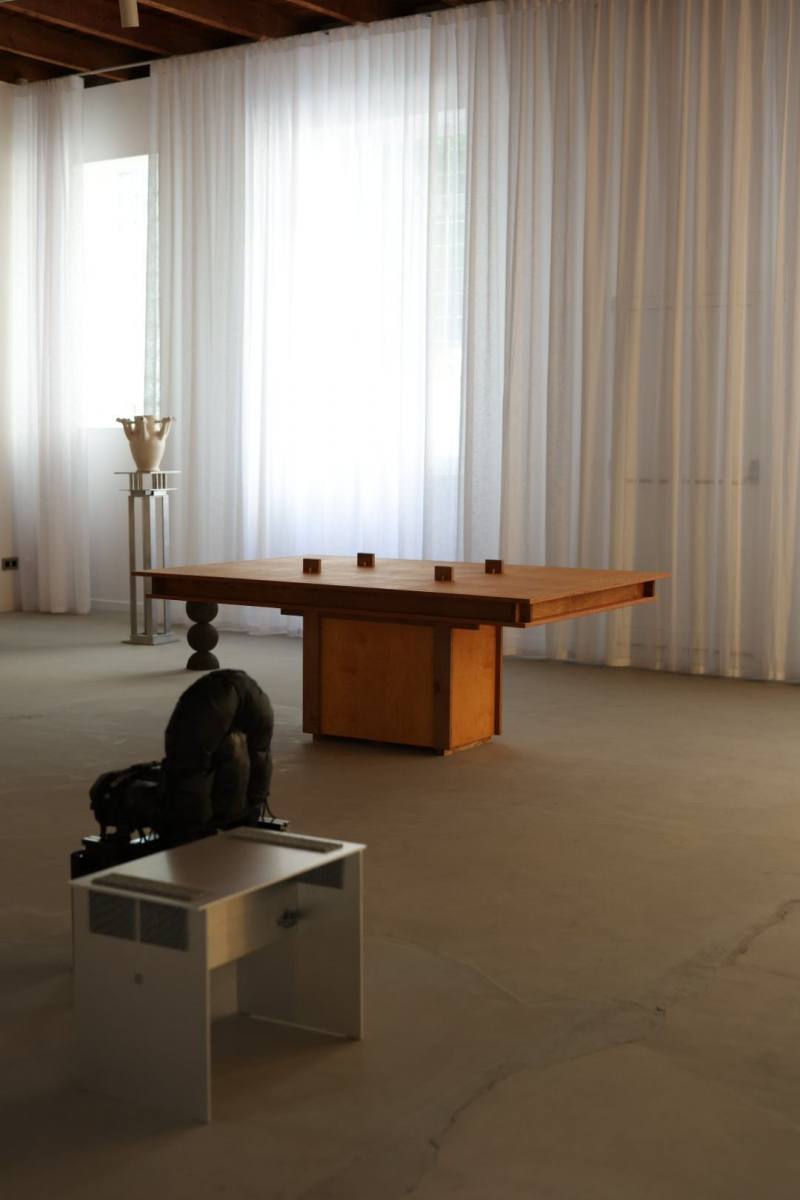
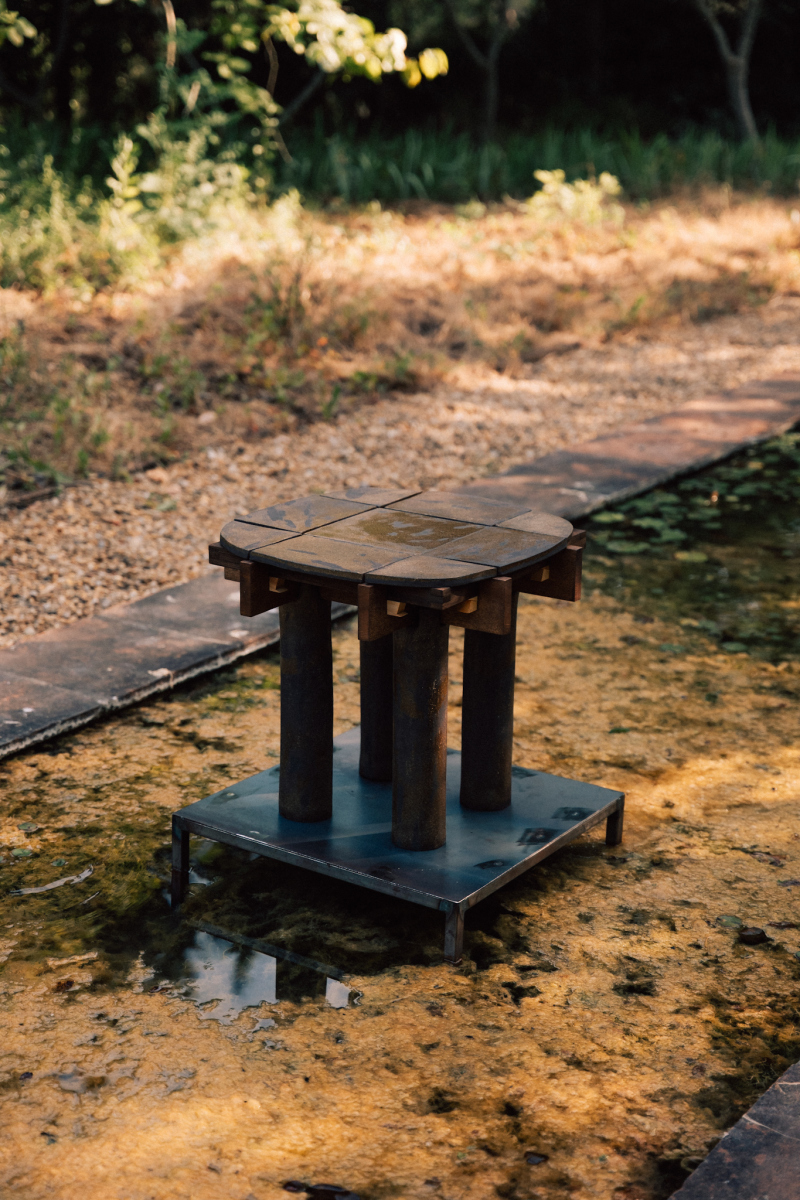
through this project, pour vous, i have a chance to meet and discuss with a lot of designers who do author editions. and there you can follow all the process, it’s not only pen and paper, it also involves a great deal of craftsmanship, knowledge of the materials and principles of construction. jonathan cohen, for example, is a trained joiner; he creates wooden objects himself, but also works with interior designers and architects.
is it important for you to have a physical space, when everyone else is going digital?
i really love the events we create, where designers from a wide range of disciplines come together and discuss ideas. i like to see the different approaches and specific working methods and when different people then discuss the possibilities of working together and create completely new things.
and they meet here, you provide the space, the meeting place, and so you are, in a sense, the enabler of new designs. perhaps that’s exactly why you’re a „networker“ – because you were a curious child.
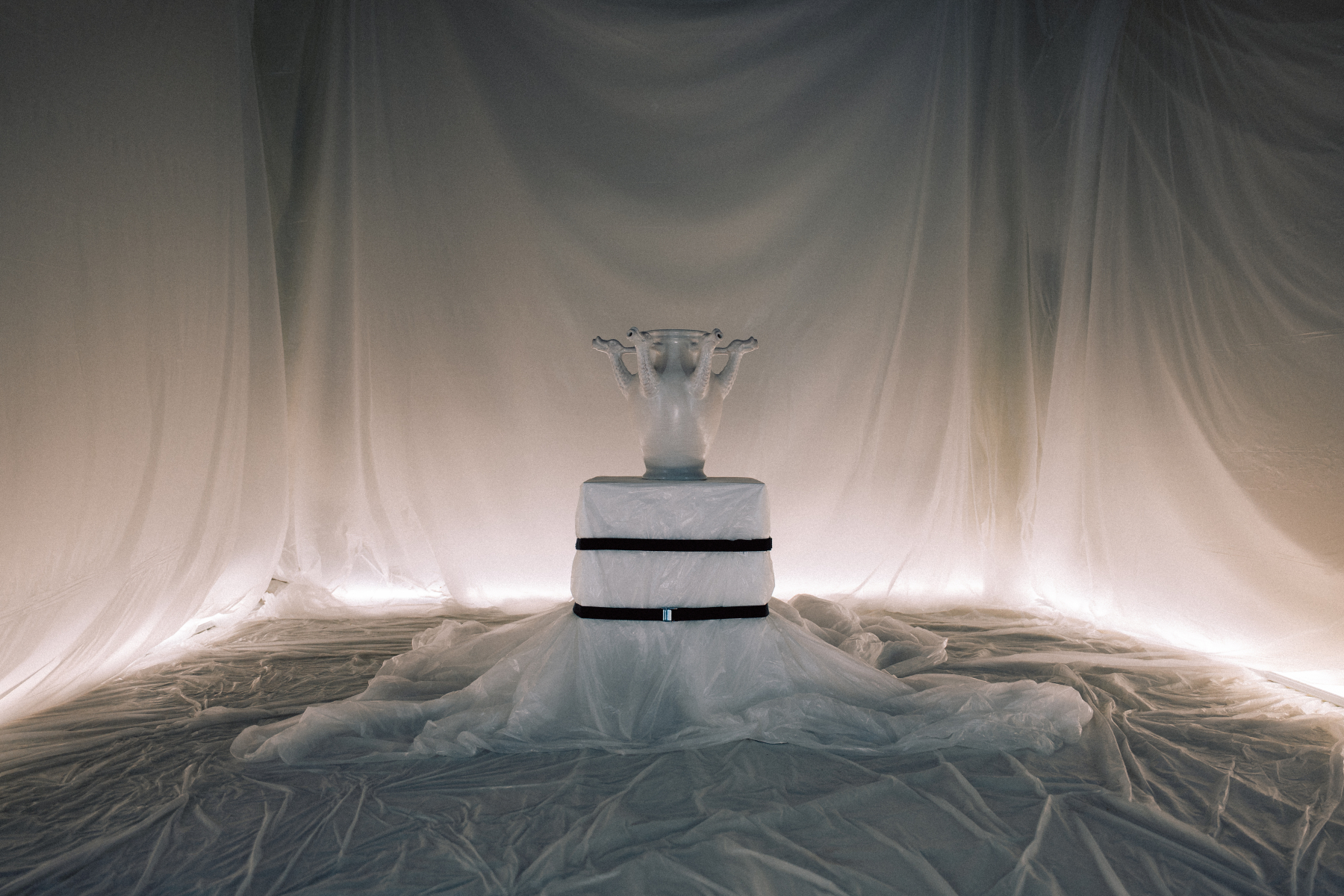
yes, perhaps. and that’s why i’m already so incredibly excited about our next project, which is taking place as part of the „off design parade“ alongside the hyères/toulon design festival: archéologie du quotidien / the archaeology of everyday life.
so, objects emerge from the curiosity of designers – who can provide the answers to specific questions themselves by creating an object as a solution to a problem. after all, industrial design often stems from a technical challenge: develop a light that directs light exactly where it’s needed. that’s how we went from a light bulb on the ceiling to the swivelling, freely adjustable task light. and there’s the next question: what do you love in design? when do you realise: “oh, that’s really good”?
i think: it’s a feeling. as i said, it’s the decisions behind the object, but at the end it’s what an object makes me feel. it’s difficult to find one single answer to that question, because in different products we have different perceptions and different perspectives to the same object.
yes, of course, everyone’s first reaction is often purely emotional: I like it or I don’t like it. but even then, you can still ask: why? and that leads to a more in-depth discussion about preferences for materials, for example.
that is, of course, my role as well: i need to really know the background of a piece of work in order to present it. i act as a kind of intermediary between designers and clients, and i need to understand the sender in order to convey the message correctly.
is a personal connection with your clients important, too?
yes, because these objects enter their daily life. they’re not neutral. they stay with them for a long time. so understanding who they are is important to find the right piece. what matters to me is the moment when someone becomes truly engaged, when something shifts. a surprise, a curiosity, an emotion. that’s when you know the object can become part of their life. and I would really love to visit clients in their homes and get to know their lifestyle – not just the flat and the furniture, but also their day-to-day lives, their habits, their routines: how many people live in the household, is it a family with children, how many people need to be able to sit at the table, and things like that. it’s always good to ask questions – and then it’s really important to listen to the answers. every project has a function and design is not art, so we have to have a reflection about that with our customers.
does that happen digitally as well – or, to put it another way: how important is social media to you and to promoting design?
digital is essential for visibility. it allows people and projects to reach out beyond hyères and makes the designers more visible. but the physical space changes the experience completely. you can touch the pieces, spend time with them, slow down. you engage with them in a different way. the gallery is also a place for gathering, not just showing objects, but creating moments of exchange. like the design talks we are launching at „pour vous“: we call it „resonances“, a series of events starting in may, dedicated to contemporary creation. a space for dialogue between practices, materials and ideas, shifting the focus from the objects themselves to what precedes them. each event invites a designer, artist, architect or craftsperson to share their work through their research, experiments and creative journey.
i’d think that suits your curiosity perfectly – and hopefully it will spark others’ curiosity too. now, let’s take a bigger leap: what do you think about the term “collectible design”?
ah, it surely has become a kind of market label. but it can also refer to objects that go beyond function, objects that carry meaning, that exist somewhere between design and art. in that sense, it’s something I can relate to.
the word ‘collectible’ naturally also implies the appeal of collecting – and often the prospect of a financial gain: some people collect art or classic cars (younger people may tend to rare trainers or nft’s (non-fungible tokens). and they hope to be able to sell these items later on at a profit. that’s what I find a bit problematic about the term.
yes, but for contemporary design, that’s pure speculation. so it’s rather difficult to use that as a selling point when dealing with customers 😉
and what about sustainable design: is it essential today – or is it really just greenwashing?
i don’t think sustainability is the central question. the real issue is production, how things are made, with what means, in what context. that’s where the real impact lies. for example, think about a designer working with sustainable material, like mushrooms. then it’s not about the longevity of the product, it’s about what kind of material is used and if that’s sustainable. a vase made from a mushroom material maybe last only six months or a year. but that might be perfectly fine for this project: it grows and it fades – and if you need a new vase, you might just grow one yourself. that is the value of experimenting with sustainable production: such objects could reduce both financial costs and environmental impact at the same time.
on the other hand, in industrial production we use a lot of plastic, particularly for items that are quickly thrown away – in other words, those with a short lifespan. but when plastic is used for a piece of art that may well last for decades, it’s not the same thing. It’s not a ‘disposable product’; it isn’t consumed, but preserved. and a long lifespan is, after all, a form of sustainability.
so, we’ve learnt quite a bit about “collectible and sustainable”. now, can we talk about some of the pieces in your gallery? shall we each pick three objects and have a chat about them?
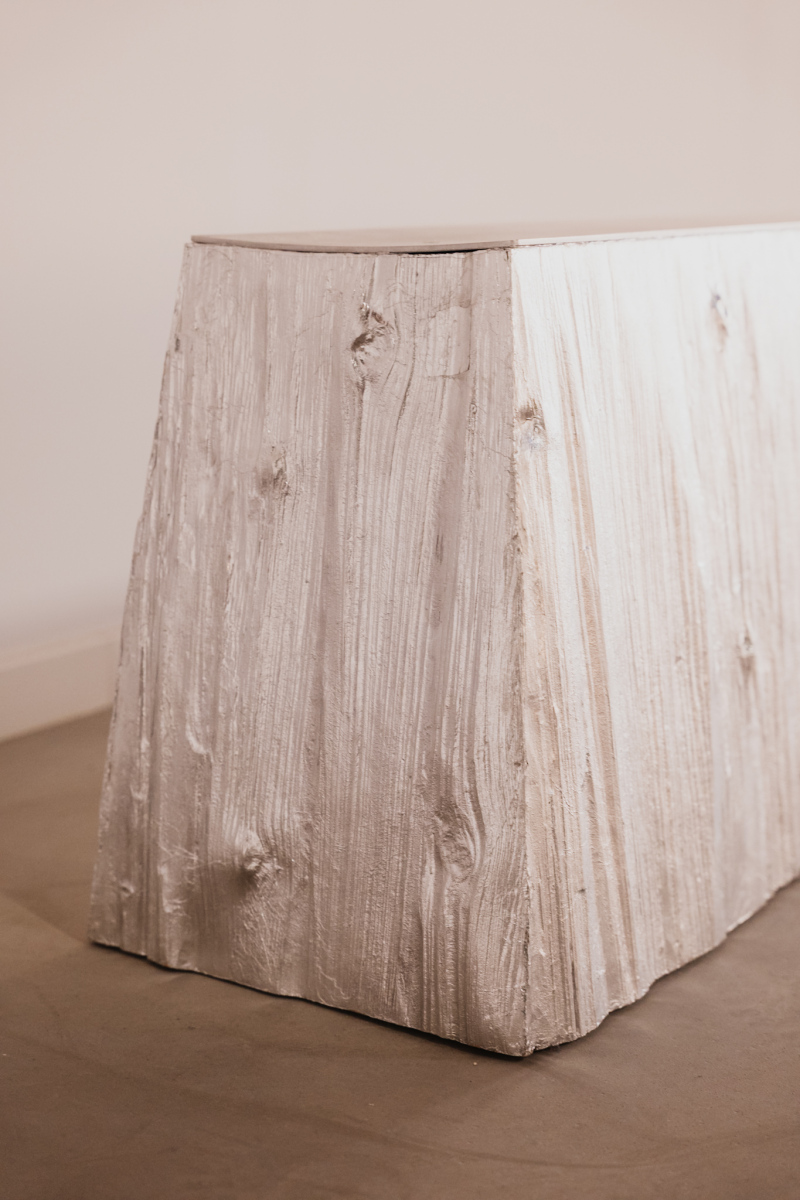
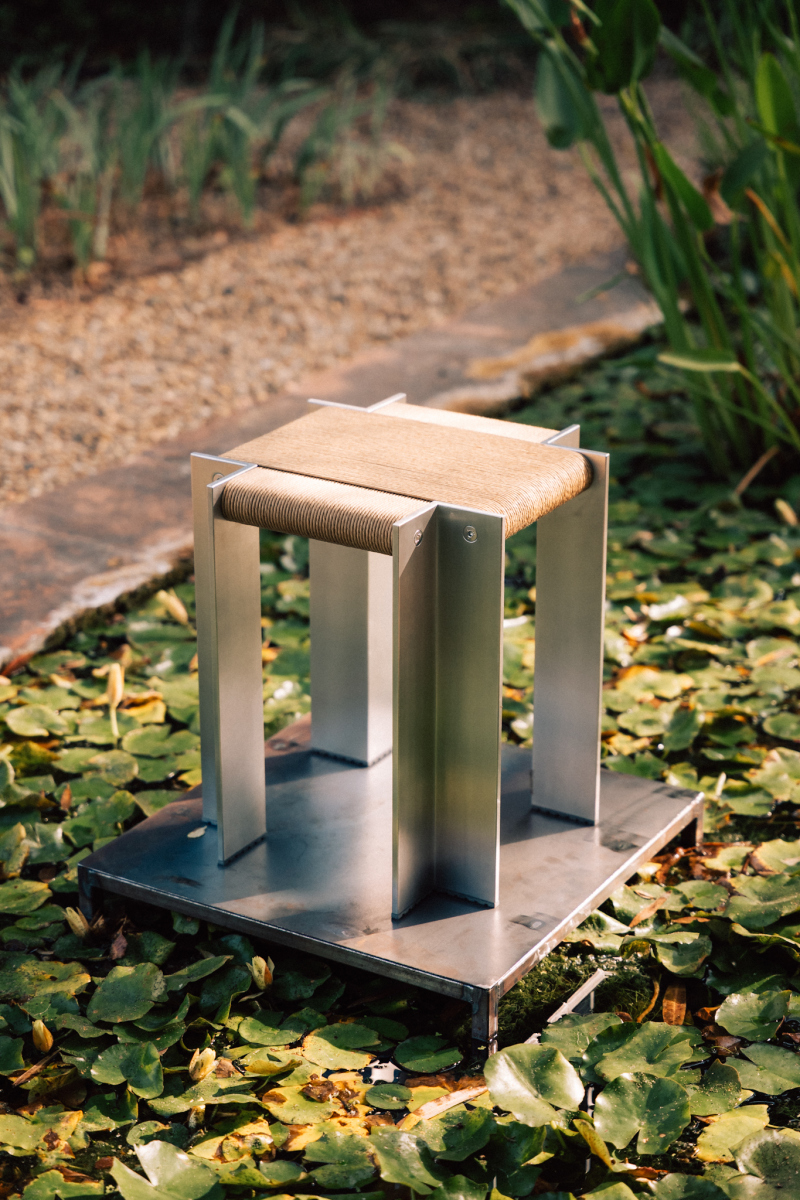
of course. i’d like to start with thibault huguet, he works at „zaventem ateliers“ in bruxelles. for example, his „cambium bench“ is interesting because of its process. he combines split pine wood with a thin layer of aluminium, the material is revealed, almost exposed. the grain of the wood becomes the visual language of the piece. this thinking is really essentiell for him, he magnifies or enhances what the material is all about.
solid, impressive and yet light, thanks to the way the shiny aluminium reflects its surroundings…
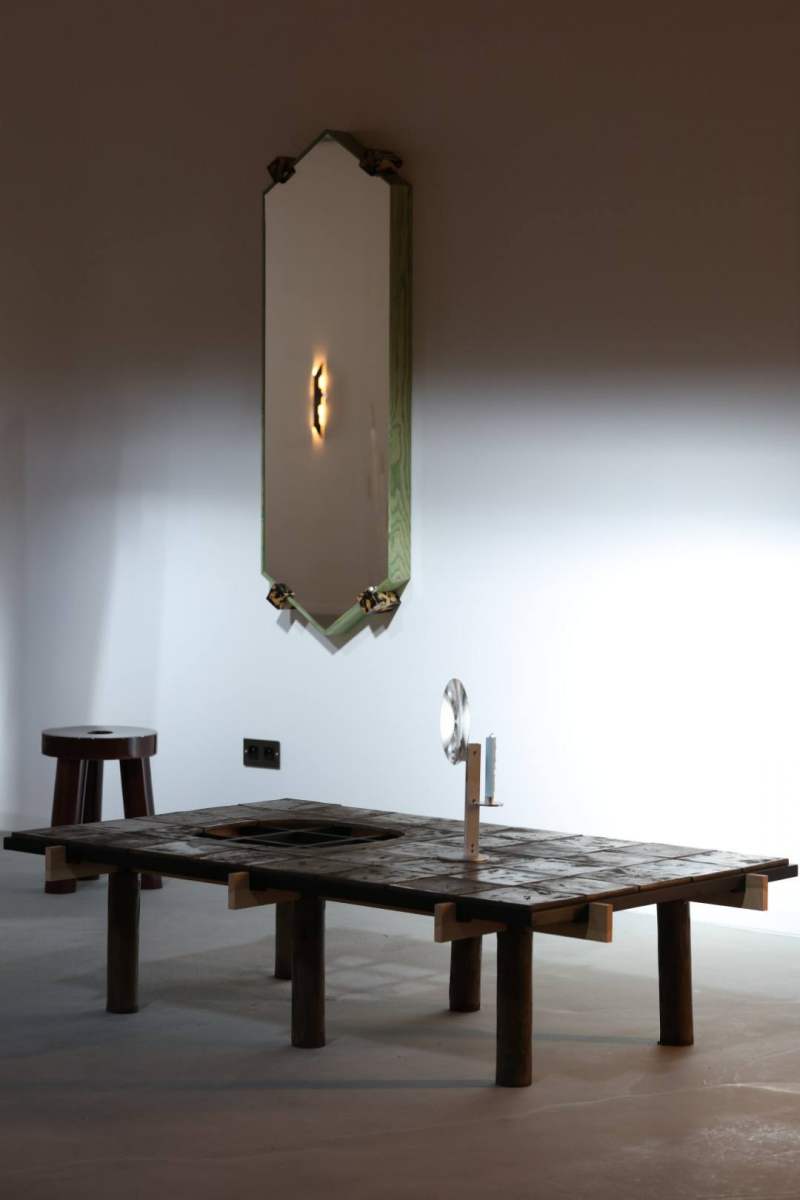
now, let’s have a look at this mirror by atelier jonathan cohen (mmh01 miroir mural hexagonal). jonathan’s work is really sculptural, he’s coming from a graphic design background but is also a trained carpenter. he creates an object and the plays with geometric forms on it. here, the surface is treated almost like a print — creating rhythm and pattern by applying paint with a stamp. and you can see a lot of „memphis“ influences…
and a bit of „art deco“, i’d think?
yes, exactly, that’s what i thought too.
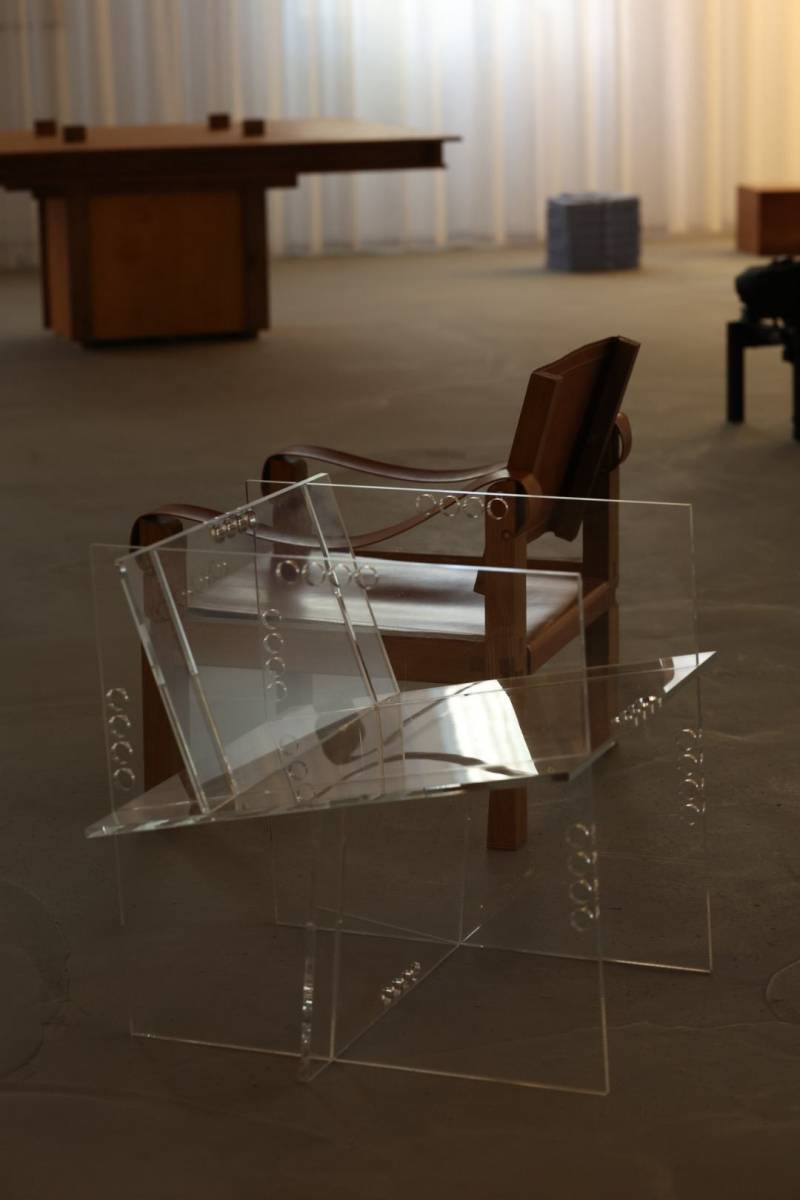
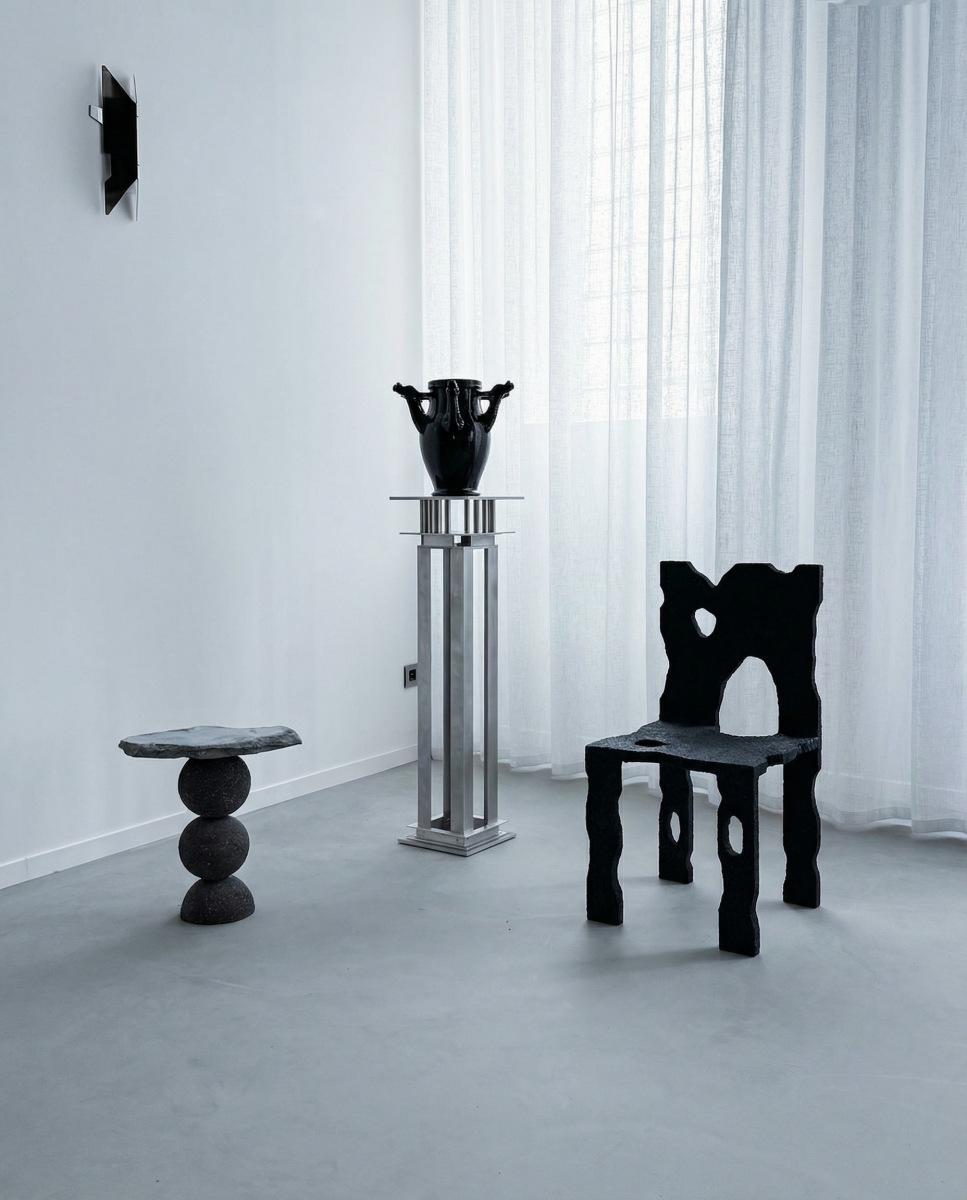
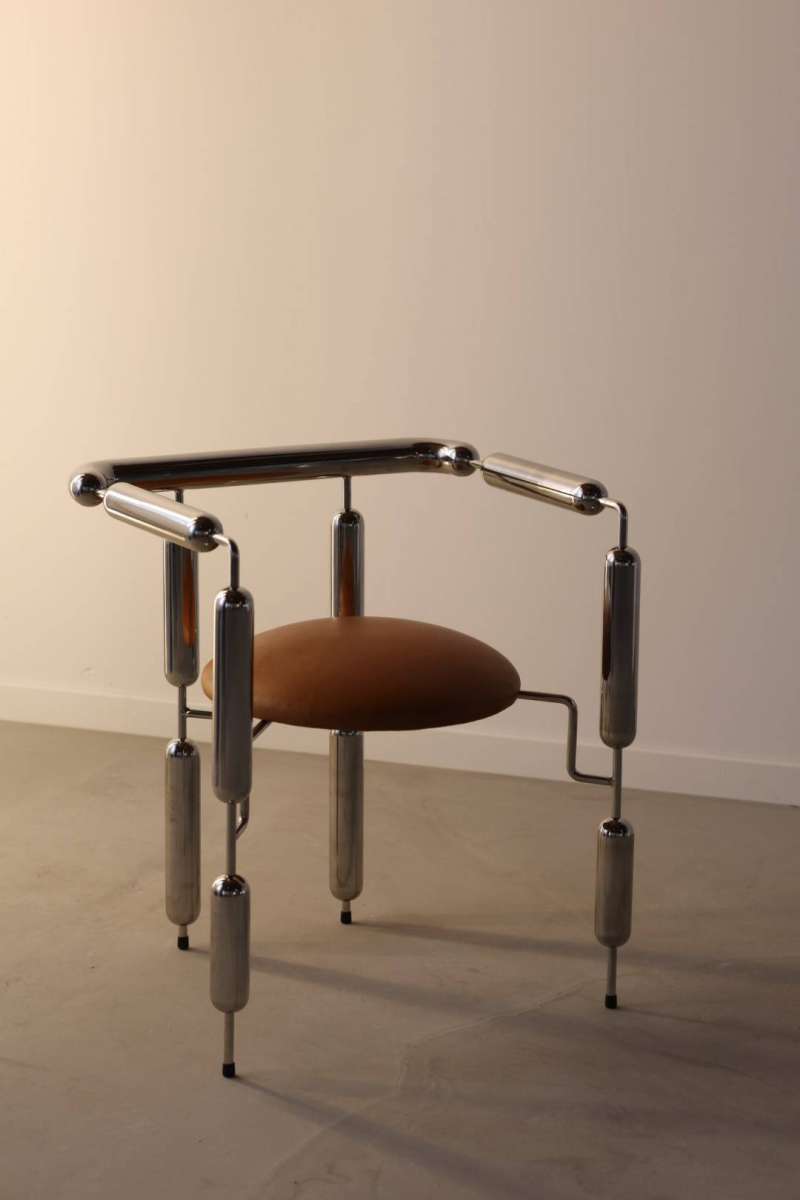
so let’s have a look at a very different object next: this chair is called „aetna“ and i think you can see why. it’s made by paul hardy, he is a trained architect, interested in mineral and geological processes and works in a very different way.
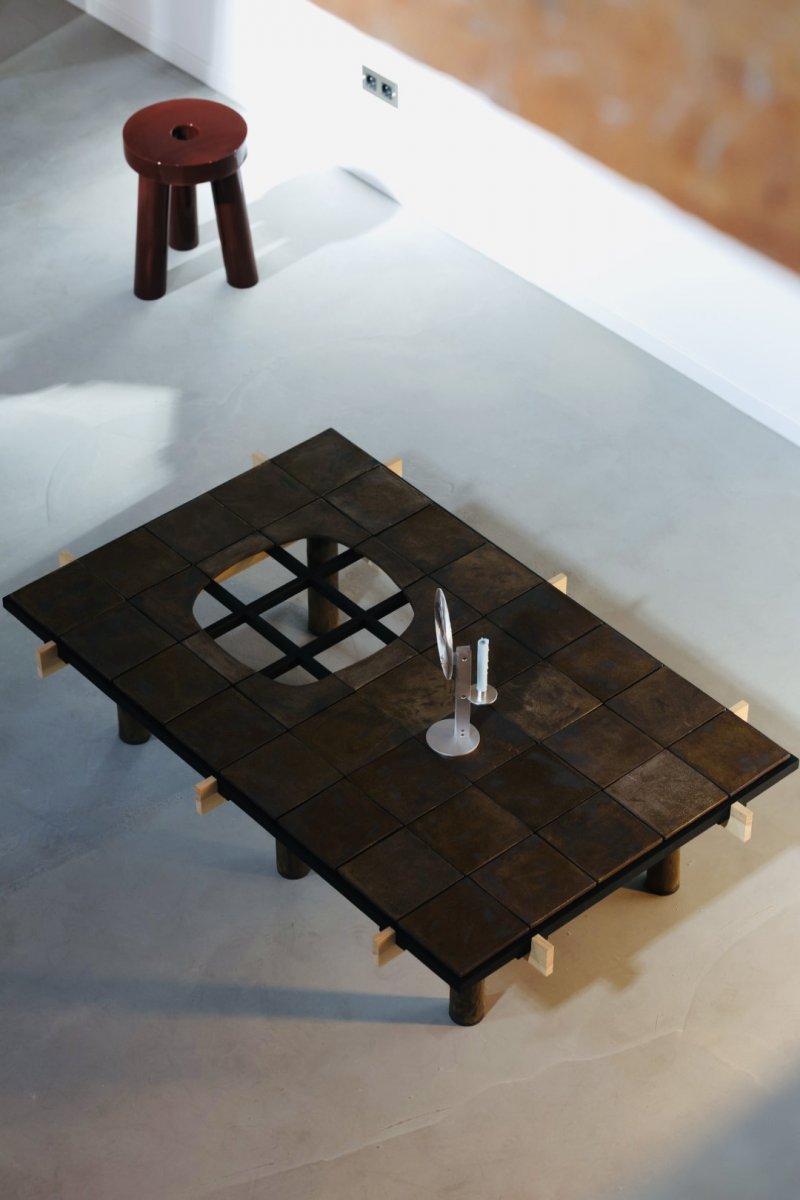
he creates his own materials from construction waste, here you have a wood structure, plastered with crushed debris from building sites like dust or rubble mixed with binder.
at first glance, you might think it’s burnt wood; then you think of tarmac or lava …
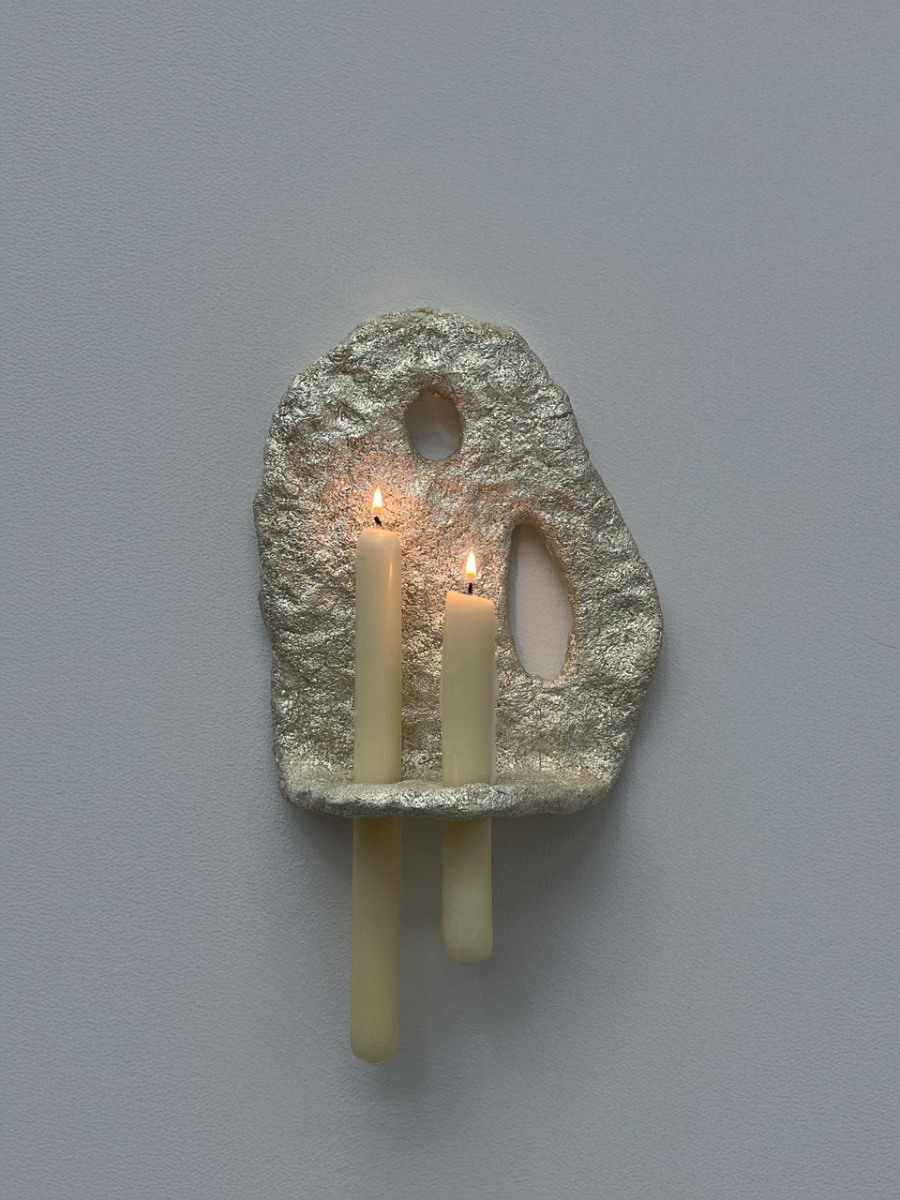
yes, you might make those associations — but underneath it’s all waste material. he treats objects as traces of gestures. and, naturally, the impression always changes: he also makes wall sconces from this material. but then he uses gold to create these wonderful reflections of the candlelight.
ah, I know that mirrors were often used in candlesticks like this to increase the light output. but this one isn’t as glaring; it changes the atmosphere.
ok, those were your three items; now I’ll pick some of my own:
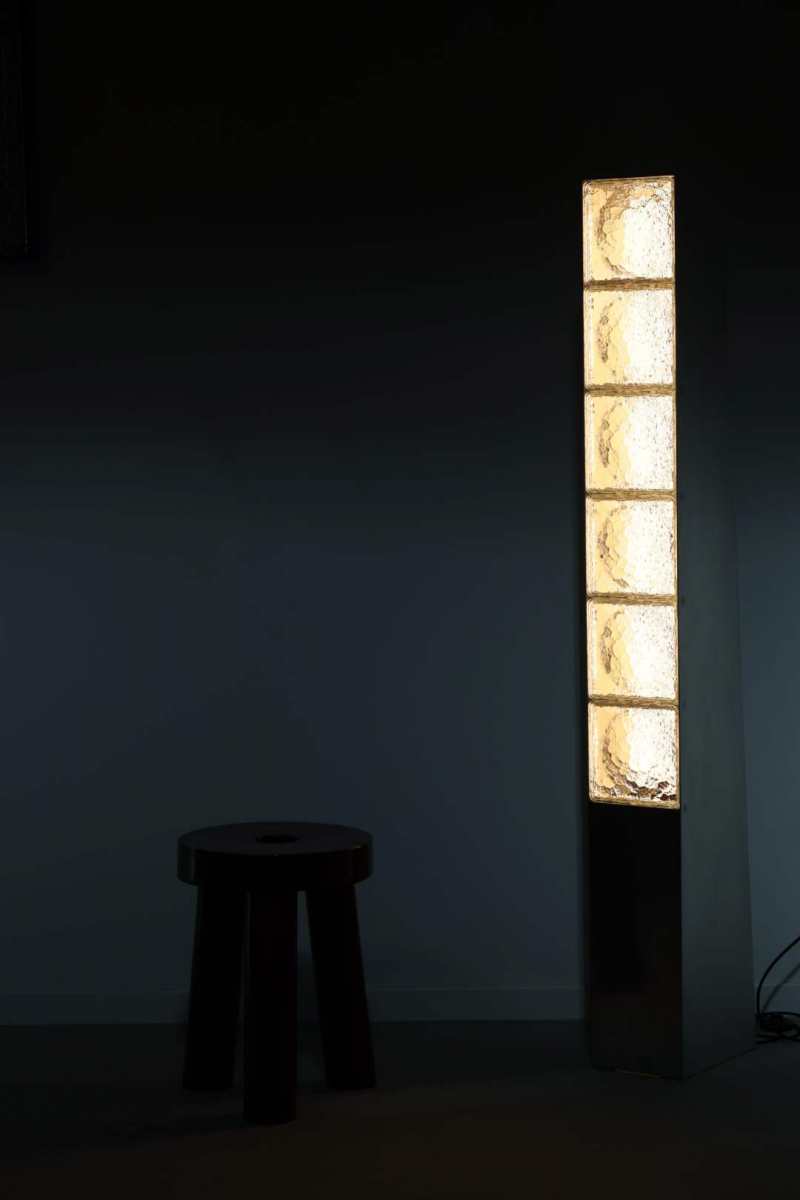
I was immediately captivated by this huge floor lamp as soon as I entered the space – who made that?
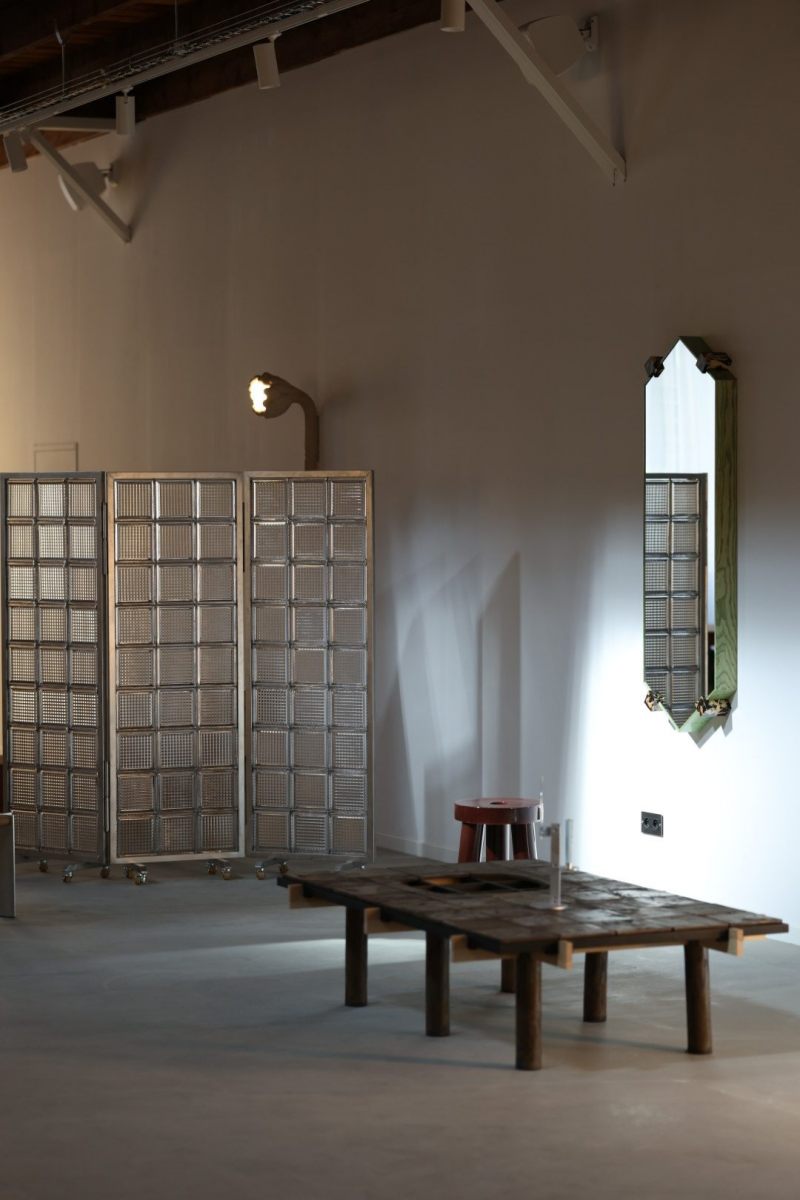
that’s „henry“, by clement pasquier… a piece from a collection of objects made with glass bricks. he works at the intersection of interior architecture, scenography and object design.
i really love the glass, it reminds me of this famous glass house in paris, la „maison de verre“, built end of the ‘20s… today, these bricks are often seen as old-fashioned and are removed – but they work brilliantly as a transparent wall that lets light in from outside – or glows in the evening when the lights are switched on inside the building. and that’s exactly the look he creates with this lamp.
the second amazing feature: it looks like a large loudspeaker from the 1980s hi-fi times, an oldschool „box“. but it’s actually for light, so it’s more of a ‘lightspeaker’. it emits light physically impressive, it feels like the light touches you.
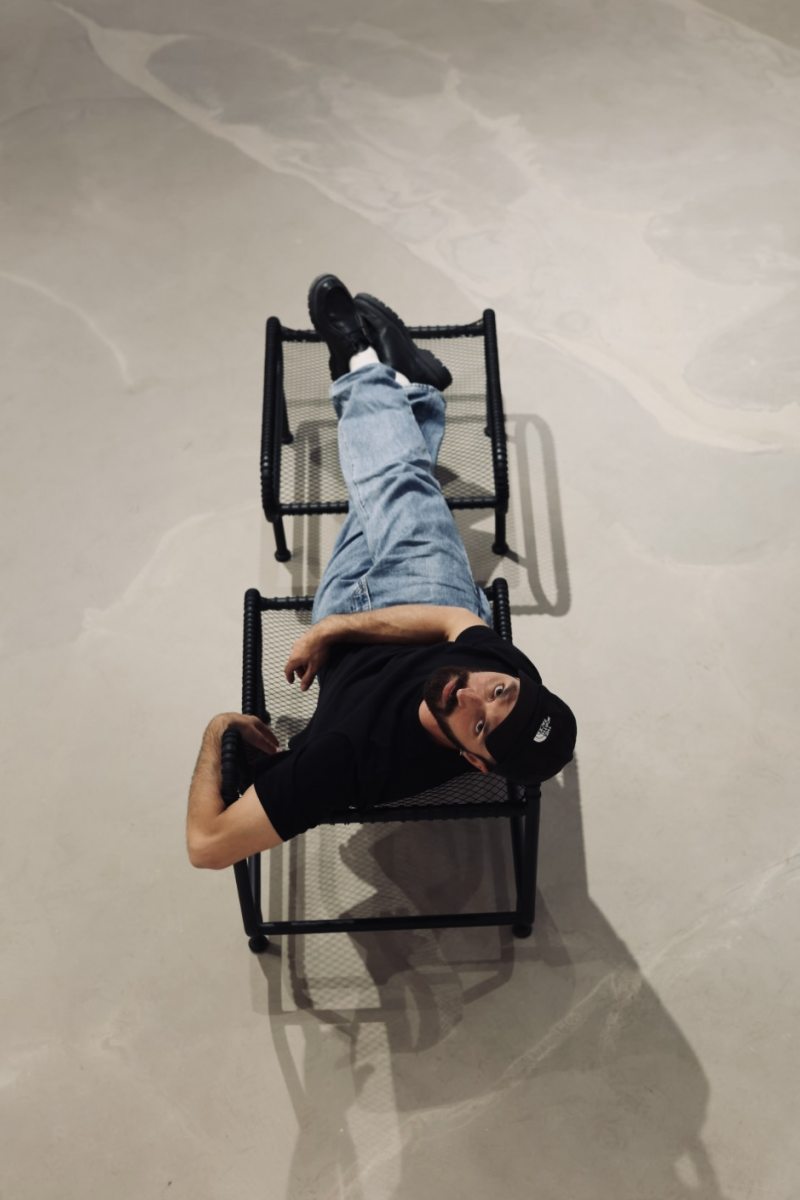
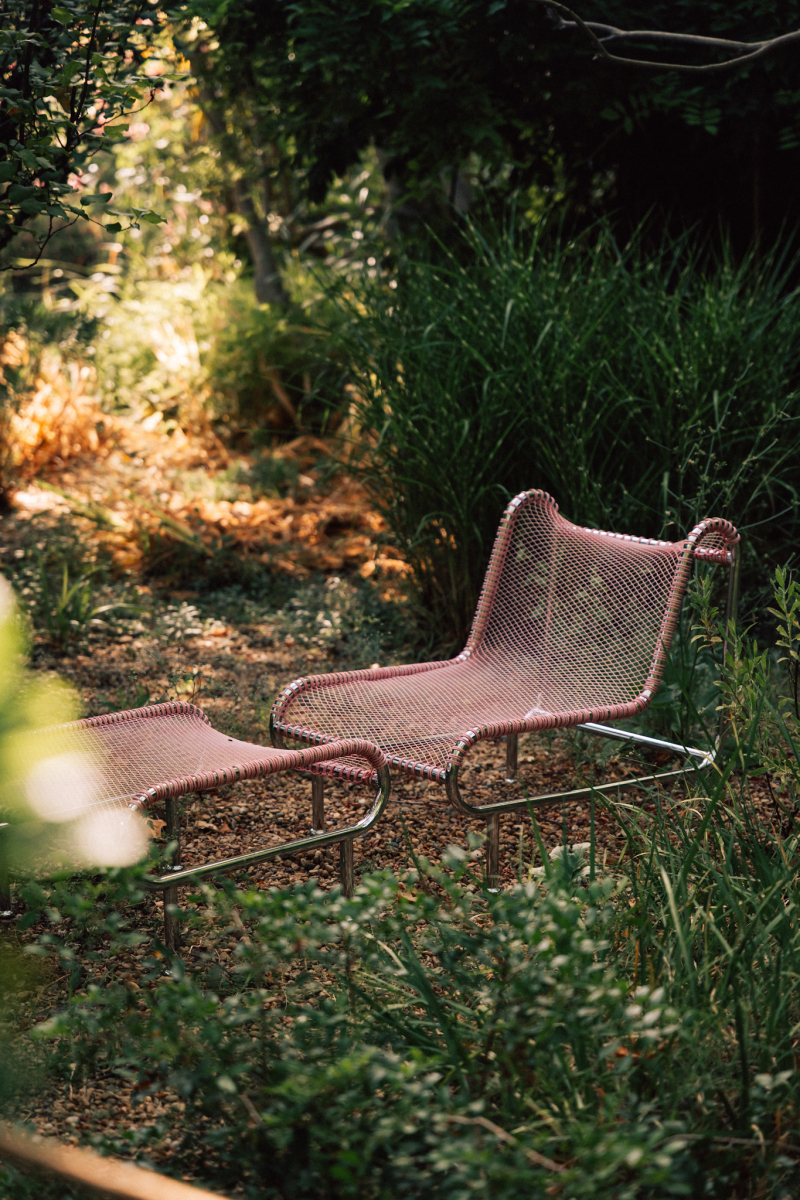
well then, let’s take a look at this collection: these are fantastically innovative and creative pieces of seating furniture, the ensemble grand ribaud et ottoman by thomas defour for 13 desserts… it’s impressively simple – just two materials, tubular steel and nylon mesh – but it looks as though it’s been around since 1920; marcel breuer would probably be jealous. i love the texture, the haptic sensation of running my fingers over this fishing net.
yes, 13 desserts is interesting: it is a “maison d’édition”, founded by clément rougelot and kevin dolci. they design products themselves but also work with external designers. and their pieces are often experimental, colorful and also „fun“, it’s a collaborative collection, combining industrial processes and artisanal know-how.
oh, I’ve still got one chance left: we absolutely must talk about those lights
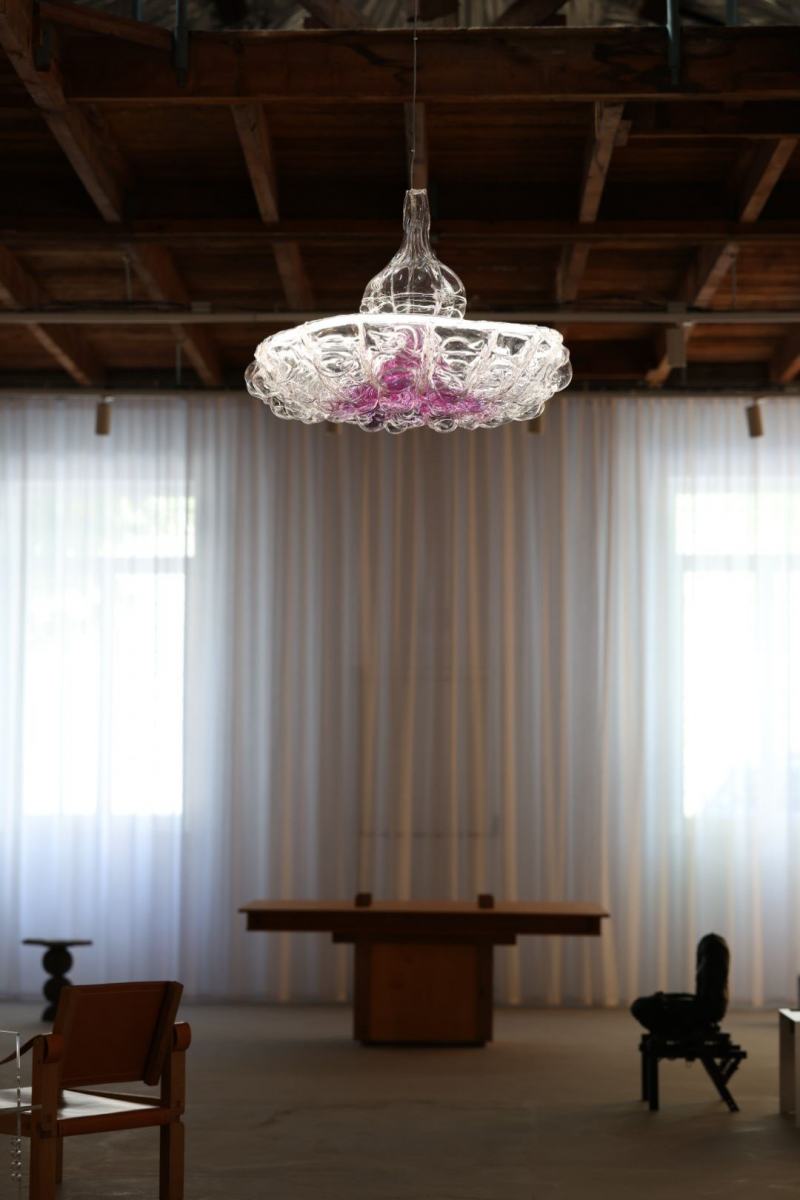
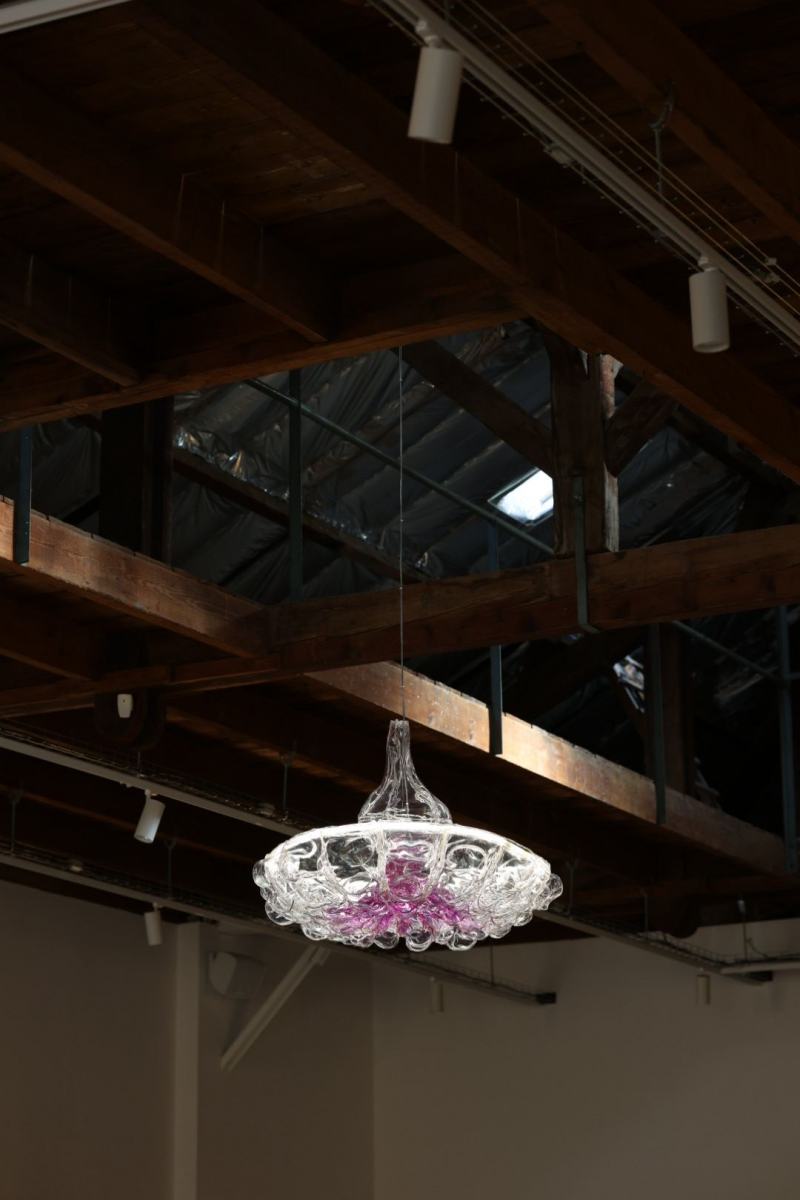
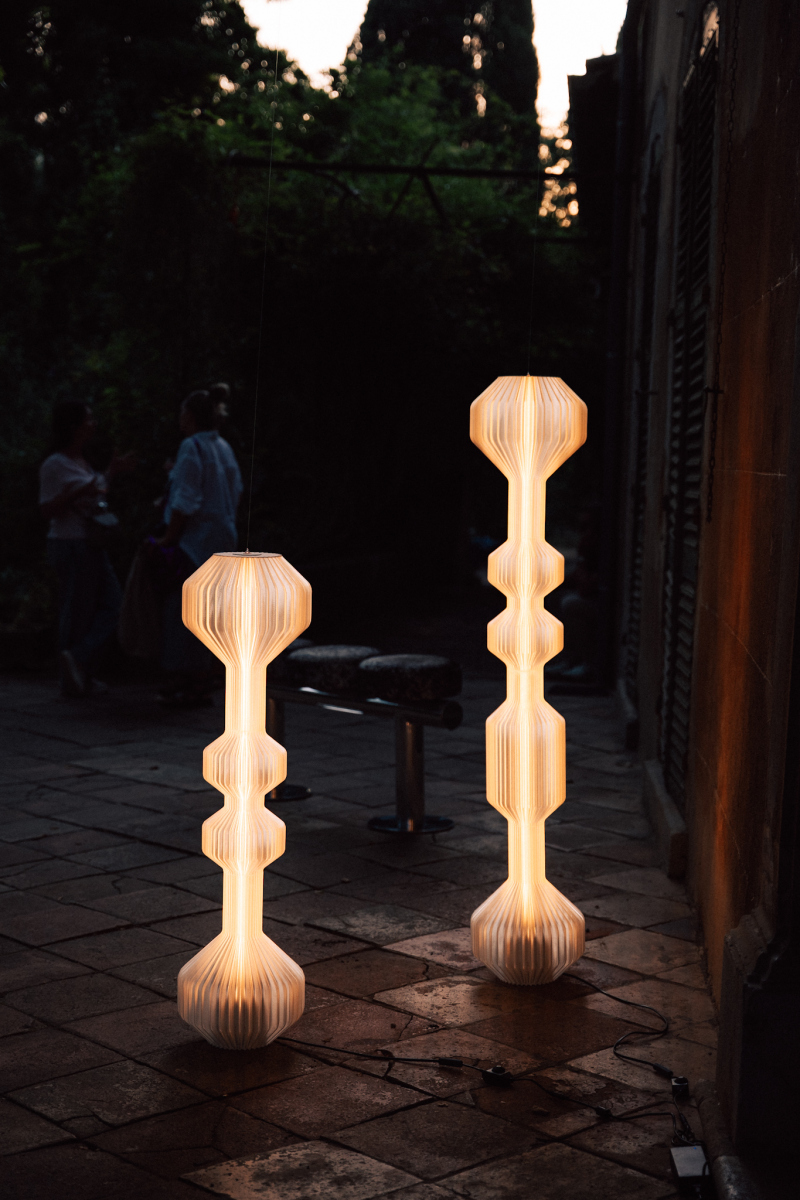
that’s the „buoy collection“ by lucas zito, a french designer who studied in eindhoven and developed a deep interest in 3d-printing. and he always experimented with recyclable materials combined with new technologies. the base material he uses for the 3d printing is corn starch, maize. it’s called „pla“ (starch-based thermoplastic).
interestingly a lot of designers seem to come out of the eindhoven design school.
yes, especially in „collectible design“. in france, education and training often seems to be very much focused on ‘industrial design’; it’s a different perspective when you place more emphasis on experimentation and new materials, as that naturally encourages innovation.
It is a completely different kind of lighting fixture to Clement Pasquier’s architectural approach, but just as impressive. The lights have a photo: florian puech photo: florian puech physical presence; it is not just about light as a practical function, but also about the beauty of the object itself.
Perhaps we could finish by talking a little about the role of design itself: after „salone di mobile“ in milan, there was a debate or a discussion about the role of brands in design and i just read a „rant“ about it: „the luxury marauders take milan“ and jasmin jouhar called it „milan luxury week„. and overall, the big brands all seem to be looking to the past, with reissues of their iconic designs. is this blocking younger designers?
There has always been a fascination with the past. but today, it’s also a strategic choice. re-editions are safer, economically more predictable. but at the same time, independent and small-scale design offers another direction: more experimental, less standardized, more open.
From my point of view, it’s a shame, of course, that the very brands that used to take risks no longer do so, or at least not as often. they became famous with progressive design – and today, it often seems to me that this is missing. it’s often just about incremental improvements; there’s a lack of courage to really try out new things. partly because, of course, it costs money and things can go wrong.
That’s right, but that’s what we’re here for: another direction, more experimental, less standardized and more open. that’s not really compatible with industrial production. in my vision, „collectible design“ is comparable to „haute couture“ in the fashion industry: not because it’s rare and expensive, but because designers can take more risks, it’s a safe space for experiments and at the end theses pieces can influence the whole industry, maybe.
ok, last question: we personally really like „movements“, like „radical disco“ or later „memphis“ in italy – or the 80s in germany (maybe check out „pentagon design group“). do you think we need a kind of radical change?
in my personal opinion, design doesn’t need to become more radical – but it needs to be more precise, more aware of it’s context, i think. radicality will come from engagement and from the question it chooses to address. but sometimes it’s also good just to have a bit of fun.
wonderful, thank you for these philosophical concluding remarks (and for your time, of course) and I look forward to seeing you again at the “design parade hyères” at the end of june.
Thank you very much as well – and I’m also really looking forward to it.
practical information:
pour vous design, 84 avenue gambetta, 83400 hyères, france
instagram : @pourvous_design
web: https://pourvous-design.com